
Safety, Health & Quality Practitioner (OHS Practitioner)
Building safer workplaces and responsible industries. Programme Overview This qualification equips learners to become competent Occupational Health & Safety Practitioners, ensuring workplace compliance, effective risk management, and the transformation of safety culture across industries. What You Will Learn Career Paths …
Overview
Building safer workplaces and responsible industries.
Programme Overview
This qualification equips learners to become competent Occupational Health & Safety Practitioners, ensuring workplace compliance, effective risk management, and the transformation of safety culture across industries.
What You Will Learn
- Conducting risk assessments & investigations
- Implementing safety systems
- Managing incidents & non-compliance
- Understanding OHS legislation
- Quality assurance & continuous improvement
Career Paths
- Occupational Health & Safety Practitioner
- SHEQ Officer
- Safety Auditor
- Compliance Supervisor
Career Outcomes for OHS Practitioners
Graduates of the Occupational Health & Safety Practitioner (OHS Practitioner) qualification can pursue diverse roles across public and private sectors:
- Occupational Health & Safety Practitioner – conducting risk assessments, inspections, and compliance reporting.
- SHEQ Officer (Safety, Health, Environment & Quality) – ensuring integrated compliance across multiple standards.
- Safety Auditor – evaluating workplace systems and recommending improvements.
- Compliance Supervisor – overseeing adherence to OHS legislation and internal policies.
- Safety Manager / Coordinator – leading teams and implementing safety programs.
- Risk Analyst / Consultant – advising organizations on risk mitigation strategies.
- Career progression: With experience, practitioners can move into senior management roles such as Chief Safety Officer or Health & Safety Manager, or specialize in areas like fire safety, environmental health, or logistics safety
Salary Potential
As an Occupational Health & Safety (OHS) Practitioner in South Africa, graduates can expect competitive earnings that grow steadily with experience and industry specialization. Entry-level professionals typically earn between R204,000 and R285,000 per year, while mid-level practitioners progress to salaries in the range of R320,000 to R360,000 annually. With advanced certifications and several years of experience, OHS Officers and Coordinators often achieve salaries of R328,000 to R446,000, and senior managers in high-risk industries such as mining or construction can command packages exceeding R540,000 per year. This trajectory highlights both the stability and financial reward of the profession, making OHS a strong career choice for those committed to workplace safety and compliance.
Ideal For
Individuals pursuing careers in mining, engineering, construction, municipal operations, warehousing, and manufacturing.
Duration:
12 months (part-time or full-time options) Delivery Mode: Blended learning (classroom + practical workplace projects) Assessment: Written exams, workplace-based assignments, and practical demonstrations
Modules
- Introduction to Occupational Health & Safety
- Foundations of OHS
- Safety culture and organizational responsibility
- Risk Assessment & Investigation
- Hazard identification
- Risk evaluation and reporting
- Incident investigation techniques
- Safety Systems Implementation
- Developing workplace safety policies
- Emergency preparedness and response
- Monitoring compliance
- OHS Legislation & Compliance
- National and international OHS standards
- Legal responsibilities of employers and employees
- Regulatory frameworks
- Incident Management & Non-Compliance
- Incident reporting procedures
- Root cause analysis
- Corrective and preventive actions
- Quality Assurance & Continuous Improvement
- SHEQ integration (Safety, Health, Environment, Quality)
- Auditing processes
- Continuous improvement strategies
Application fee
Curriculum
- 2 Sections
- 4 Lessons
- 52 Weeks
- Section 1Section 1: Foundations of Occupational Health & Safety3
- Section 2Section 2: Compliance, Quality & Continuous Improvement3
Instructor

Requirements
- Minimum Grade 12 / Matric certificate or equivalent qualification
- Proficiency in English (reading, writing, and communication)
- Basic computer literacy (Microsoft Office, email, online platforms)
- Recommended: Prior exposure to workplace environments in engineering, construction, or manufacturing (not compulsory)
- Commitment to completing practical workplace-based projects
Features
- Accredited Qualification aligned with national OHS standards
- Blended Learning Approach combining theory with workplace application
- Industry-Relevant Curriculum designed with input from safety professionals
- Practical Projects that simulate real-world safety challenges
- Expert Trainers with hands-on experience in diverse industries
- Networking Opportunities with peers and industry leaders
- Career Support Services including CV workshops and job placement guidance
Target audiences
- Aspiring professionals seeking entry into the Occupational Health & Safety field.
- Current employees in industrial sectors who want to upskill and formalize their OHS knowledge.
- Supervisors and managers responsible for workplace safety and compliance.
- Entrepreneurs and business owners aiming to implement effective safety systems in their operations.
- Municipal and government workers tasked with enforcing safety standards in public services.
You May Like

New Venture Creation (Entrepreneurship)
Entrepreneurship is the engine of innovation and economic growth. This programme equips aspiring business leaders with the mindset, tools, and strategies to launch and sustain...

Major Appliances Repairer
A technical programme preparing artisans to service and repair major household appliances—supporting township economy growth.
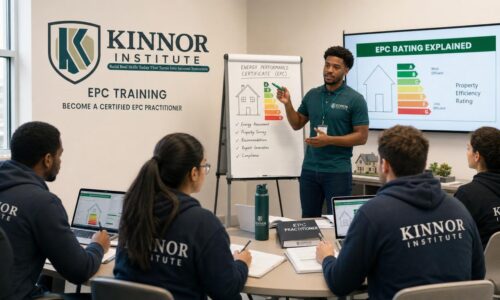
EPC Practitioner (Skills Programme)
Highlights • Conduct energy audits• Analyse building energy performance• Prepare EPC documentation• Understand SANS 1544 & legal requirements

Retail Store Manager
Programme Overview This qualification prepares future-focused leaders to manage retail operations, people, sales, customer experience, and profitability. Skills Gained • Strategic retail planning• Operations &...

Water Works Management Practitioner
Programme Overview A high-level occupational qualification for individuals operating, maintaining, and optimising water and wastewater treatment plants. You Will Learn • Water safety planning• Process...
Course Features
- Lectures 4
- Quizzes 2
- Duration 52 weeks
- Skill level All levels
- Language English
- Students 0
- Certificate No
- Assessments Self
“The Safety, Health & Quality Practitioner course at Kinnor Institute transformed my career. I went from being a junior supervisor to a certified OHS Practitioner, trusted to lead compliance audits and safety initiatives in my company. The blend of theory and practical projects gave me the confidence to handle real workplace challenges. I highly recommend this programme to anyone serious about building a career in safety and compliance.”
Nomusa Dlamini, SHEQ Officer, Manufacturing Sector